
Meet the members of the Precision Oncology Lab team.
Meet the Team
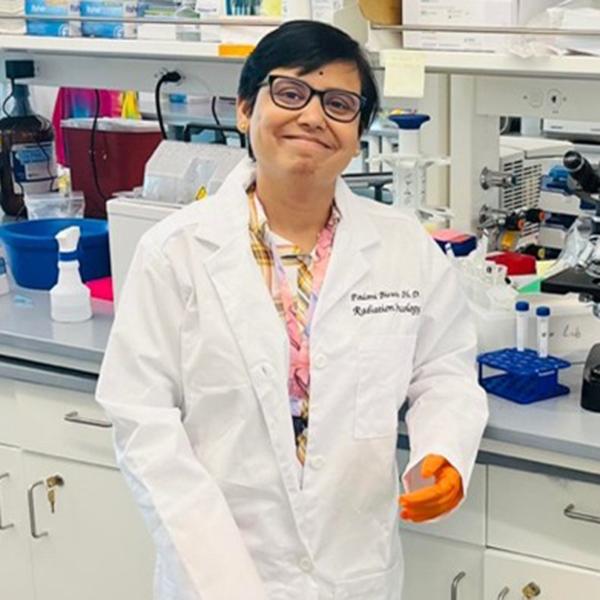
Poulomi Biswas, PhD
Research Scientist, NextGen Precision Health
Bio
Poulomi Biswas, PhD, is a research scientist specializing in molecular biology and bio microfluidics systems. With a strong background in molecular biology, her research focuses on organoid systems, cancer neuroscience and personalized medicine for head and neck cancer patients. Dr. Biswas earned her PhD in biotechnology from the Indian Institute of Technology Kharagpur and has since made significant contributions to the field through pioneering research, impactful publications and collaborations with various academic partners. Her current projects involve advancing organoid systems for the development of biobanks in different types of cancers. Dr. Biswas has been recognized for her contributions with prestigious awards, including the AWSAR DST 2023 Award, the N-PDF Award, and honors from the Bill and Melinda Gates Foundation. Her research has been published in leading scientific journals such as Journal of General Virology, Virology Journal, Journal of Molecular Biology, Journal of Chemical Engineering, ACS Sensors, Sensors and Actuators B: Chemical, and Journal of Flexible Electronics, among others, as well as in numerous conferences. Beyond research, Dr. Biswas collaborates with interdisciplinary teams to translate scientific discoveries into real-world applications, bridging the gap between academia and industry.
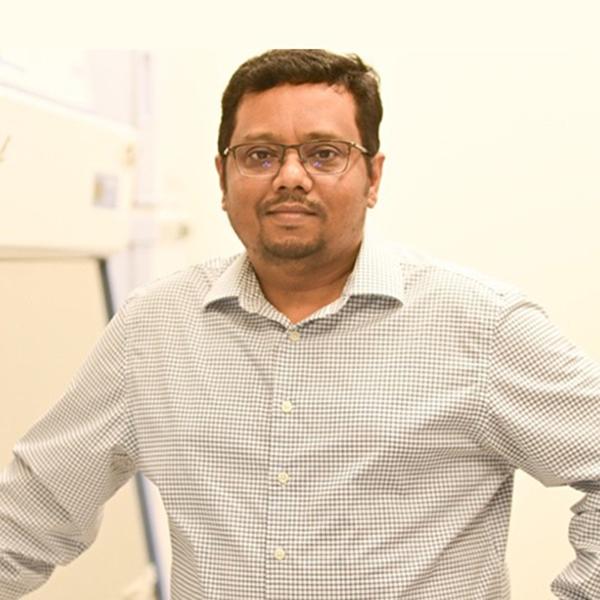
Neeladrisingha Das, PhD
Postdoctoral Fellow, NextGen Precision Health
Bio
Neel Das, PhD, is a cell and molecular biologist with a diverse and interdisciplinary background. Before pursuing his doctoral studies at the Indian Institute of Technology Roorkee, he spent five years working in the aluminum industry, focusing on wastewater, effluent treatment and basic utilities, where he got trained in mechanical engineering and fluid mechanics. His PhD research centered on deciphering various cancer cell death mechanisms using natural compounds. Following his PhD, Neel joined Stanford University as a postdoctoral fellow, where he received extensive training in radiation therapy and molecular imaging. His work at Stanford focused on the radiobiology of cancer cells exposed to external beam radiation, including investigations into FLASH radiotherapy and its unique tissue-sparing effects. Currently, Dr. Das’s research focuses on studying the radiobiological impact of Auger electron emitters, particularly 161Tb, in cancer treatment. He is developing advanced prostate organoid models to investigate PSMA heterogeneity, treatment-induced neuroendocrine differentiation and the mechanisms driving liver metastasis in castration-resistant prostate cancer. He has authored more than 40 journal articles and received competitive research funding from Stanford Cancer Institute and Stanford Radiation Oncology. Outside the lab, Neel enjoys playing music and spending time outdoors camping and hiking with his family.
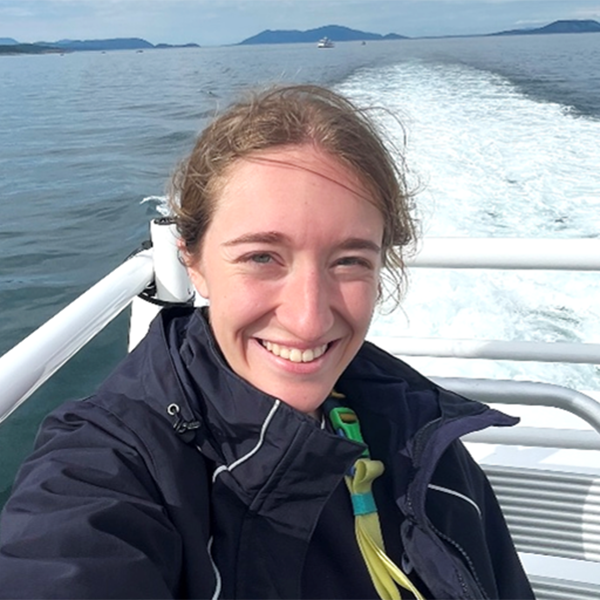
Olivia Heyne
MS Student, Biological Engineering
Bio
Olivia Heyne is a masters' student in Biological Engineering with a diverse background in healthcare and engineering. Olivia was introduced to healthcare and witnessed the devastating impact of cancer while she was a CNA in a local nursing home during the Covid-19 Pandemic. She was inspired to become a bioengineer by her experiences as a CNA. Olivia went to the University of Missouri and got her BS in Biomedical Engineering. During her undergraduate years, she participated in community orchestra, Marching Mizzou, and Club Ultimate Frisbee. She worked in the Hospital's Radiology Department and in two labs before studying under Dr. Khan. In her first lab, Olivia electrospun polymers with the goal of creating a cellular scaffold for aortic leaflets. In her second lab, Olivia worked on analysis for a PET sickle cell tracer and also worked on the development of a Pb-212 chelator there. Currently, Olivia is developing an analysis method for using electrical impedance spectroscopy to look at cancer biology. Olivia is a published author and presented seven research posters throughout her undergraduate career. In her free time, Olivia enjoys painting, working out, and spending time outside.
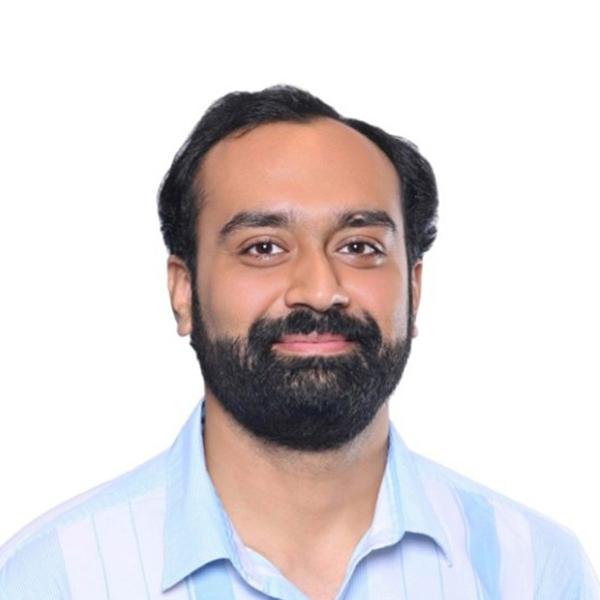
Parshad Suthar
PhD Student, Department of Electrical Engineering and Computer Science, University of Missouri–Columbia
Bio
Parshad Suthar is a PhD student in Computer Science at the University of Missouri–Columbia. His research integrates machine learning, deep learning (Rao Lab) and biomedical discovery, with a focus on applying advanced computational methods to cancer-related problems (Khan Lab). His current work spans two primary projects: leveraging machine learning to investigate the influence of copper on breast cancer using patient-level clinical and biomarker data and analyzing DNA methylation sequencing data to identify epigenetic biomarkers in head and neck cancer, supported by NSF and NIH funding. Parshad also brings expertise in Bayesian deep learning, reflected in his published IEEE work on dysplasia classification in inflammatory bowel disease patients using whole-slide image analysis. His broader research interests include deep learning, computational genomics, and the development of clinically relevant AI tools that can advance precision oncology.
Before joining the PhD program, Parshad completed his MS in Computer Science at Mizzou and gained industry experience as a software developer, building scalable applications using cloud and full-stack technologies. Outside of research, he enjoys playing badminton and pickleball, and is an avid sports fan.
Undergraduate trainees
BioFLARE Program
2025-2026
- Busso, Hannah
- Faimon, Abi
EFCC SURF Program
- 2025 - Megh Gautham
- 2026 – Ethan Liu