
Read about the projects funded by the Midwest Biomedical Accelerator Consortium (MBArC ) in 2023.
3D Force Sensing Insoles for Wearable, AI Empowered, High-Fidelity Gait Monitoring (KU)
Loss of functional mobility associated with aging is the leading cause of dangerous falls and loss of independence in the form of nursing home admittance. Disorders of gait and balance consistently emerge as strong risk factors for falls. Moreover, aging-associated disorders, such as neurological conditions, orthopedic problems and other medical conditions (i.e., obesity, peripheral arterial disease) tend to cause gait and balance disorders. Falls are a significant health burden in older adults, with changes in gait being a significant predictor of increased fall risk. Falls are the leading cause of death due to accidental injuries in individuals over 65 years-old. Currently, individuals over the age of 65 can be screened for functional mobility and gait and balance impairments that impact fall risk using simple in-the-field physical performance tests. A benefit of these tests is that they can be implemented without expensive equipment, and they place a non-invasive, relatively low burden on the patient. However, the tests are time-consuming and trained personnel are required. They have limited scalability, and their efficacy in predicting falls is limited6,8 because they lack the ability to obtain highfidelity/ sensitivity gait information. This has led researchers to use laboratory-grade motion capture and force plate systems for gait measurement to gain higher fidelity information for improved fall prediction models based on gait patterns. Studies using these systems can accurately predict falls from induced slips and trips with prediction accuracies of 76% and 90%, respectively. However, due to the extensive and expensive nature of replicating these protocols at scale for screening purposes, these models are unfeasible unless laboratory bound equipment is replaced with wearable technologies, like force sensing footwear. To meet this need, we are developing a 3D force and motion sensing shoe insole product, Axiostride, that will allow the higher fidelity data of 3D force plates and motion capture systems to be automatically monitored by wearable technology during at-home real-life activities. The product will enable a new clinical flow where healthcare providers are empowered to gain critical functional mobility and gait data in aging patients at risk for functional decline and dangerous falls.
An Intelligent System for Renal Biopsy Guidance (OU)
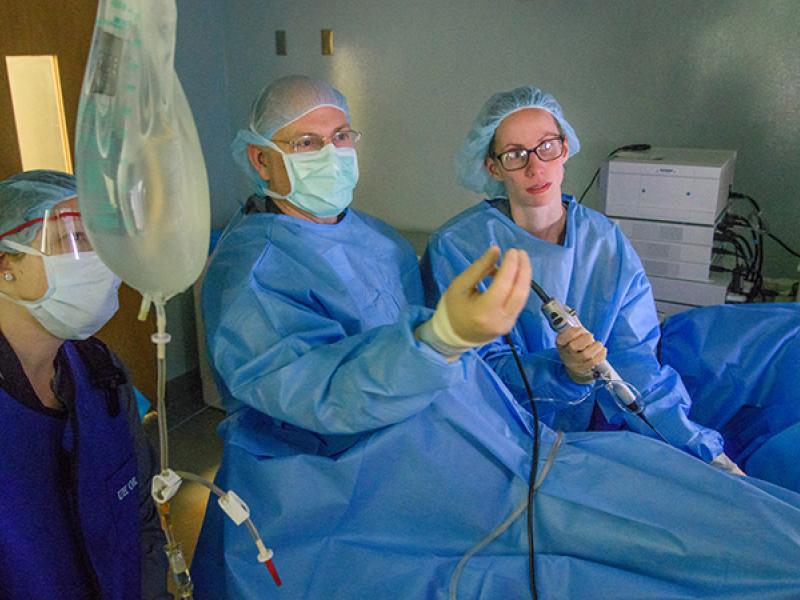
15% of the US adults population (37 million people) are estimated to have chronic kidney disease. Percutaneous kidney biopsy (PRB) is a vital procedure for diagnosing medical kidney diseases. Despite being a common urological procedure, PRB presents two challenges: 1) precisely extracting the targeted tissue; and 2) avoiding renal hemorrhage. The current imaging modalities (ultrasound or fluoroscopy) can guide the biopsy needle to the vicinity of the targeted tissue by providing a macroscopic field of view. However, they cannot accurately locate the needle tip and identify the tissue types in front of the PRB needle due to their limited spatial resolution. Consequently, 14% biopsies failed to provide adequate renal tissues for diagnosis because of misplacement of the needle. A second biopsy required in 14% inadequate biopsy cases and the blood transfusion required in 26% hemorrhage biopsy cases create huge burdens to both the patient and the payers. For clinics/facilities, second biopsy or the hemorrhage complications means spending more time on one patient and reducing revenue from treating more patients. Therefore, there is an unmet need to develop a new navigation guidance system to improve the current PRB guidance methods. We aim to develop a needlebased navigation system to complement the current PRB guidance methods. This innovative imaging platform will automatically detect and recognize the renal tissue structures and the at-risk blood vessels ahead of the biopsy needle. We envision this OCT/CAD platform will improve the biopsy accuracy and reduce the miss rates of PRB needle and reduce rates of hemorrhage requiring transfusion after percutaneous kidney biopsy.
Copper pump inhibitors to potentiate cancer chemotherapy (MU)
According to the American Cancer Society, more than 43,000 patients die of breast cancer each year in the US (18) and approximately 90% of these deaths are directly or indirectly attributable to the development of chemoresistance. The problem of chemoresistance is particularly acute for triple negative breast cancer (TNBC), a highly aggressive subtype of breast cancer that lacks expression of the estrogen receptor (ER), progesterone receptor (PR), and human epidermal growth factor receptor 2 (HER2). Due to the absence of these receptors, traditional targeted therapies such as hormone therapy or HER2-targeted therapy are not effective in treating TNBC. Chemotherapy remains the standard treatment for TNBC, and thus, there is a major unmet need to prevent chemoresistance in patients with this incurable disease (20). Given the problems outlined above, there is an urgent need for therapeutic interventions that either reduce the likelihood of developing chemoresistance or lower the effective dose of chemodrugs needed to eliminate tumors. The copper (Cu) exporters ATP7A and ATP7B are another class of drug exporters involved in chemoresistance are widely reported as valid targets for mitigating chemoresistance in cancer. MKV3 (Cuprostat) is a small molecule that blocks the activity of the ATP7A and ATP7B multidrug exporters. This renders cancer cells more susceptible to copper overload as well as the cytotoxic effects of chemotherapy drugs. The following will be tested: whether MKV3 sensitizes TNBC cells to chemotherapy drugs cisplatin and doxorubicin and whether MKV3 potentiates the therapeutic efficacy of cisplatin and doxorubicin in mice. We expect MKV3 to be administered as an adjuvant with chemotherapy drugs to TNBC patients in an outpatient facility.
Implant for sinus lift procedures allowing safer membrane elevation prior to dental implant placement (UMKC)
In dentistry, the loss of posterior teeth (premolar and molar) in the maxilla regularly leads to bone loss and subsequent sinus pneumatization. Other factors that contribute to bone loss in this area are tumor removal or generally low bone mass in the alveolar crest. To ensure the stability of a dental implant placed in this region, a remaining bone height of 5 mm or less demands the regeneration of bone prior to implant placement and/or loading. Current gold-standard techniques for membrane elevation, including autologous bone grafts, have been evaluated for their effectiveness and risk. Previous and current techniques resulted in insufficient bone formation for the placement of a dental implant at a second stage or around a dental implant that was placed simultaneously with the sinus lift procedure, which can lead to a not fully stable implant and subsequent implant loosening. An implant that can provide this risk reduction while maintaining bone formation compared to current standard approaches for sinus lift would have a high impact on patient safety and quality of life. This impact would be further increased if the implant can lead to accelerated bone regeneration to allow sooner placement of the dental implant. The detaching and lifting of the sinus membrane from the bone during the lateral window sinus lift procedure is the most critical part and causing the most commonly occurring complication in sinus lift procedures. The proposed solution aims at carefully lifting the majority of the membrane off the bone without manual interaction with a surgical curette, during which most perforations occur as confirmed by interviewed oral surgeons. By selection of an appropriate elastic material and design, the membrane elevation can be performed more evenly and carefully. Using the proposed device, the procedure’s complexity will be reduced and only an initial creation of a small pocket between membrane and bone is required. The proposed sinus implant that helps reducing the risk of membrane perforation and subsequent complications pocket between membrane and bone.