
Dear Colleagues,
I recently enjoyed a tour of the new Thompson Center for Autism and Neurodevelopment with Dr. Connie Brooks, executive director of the Thompson Center, and several colleagues from our MU Health Care and School of Medicine communications teams.
The new Thompson Center is situated at the South Providence Medical Park. It is approximately 50% larger than the combined area of the two current Thompson Center buildings and will allow for double the number of annual patient visits.
Starting March 10, all Thompson Center appointments will be held at the new building, and a public grand opening will be celebrated on May 8.
This beautiful facility is a testament to the dedication of our supporters and the teams who have invested countless hours traveling to other autism centers and designing innovations that meet a wide variety of needs.
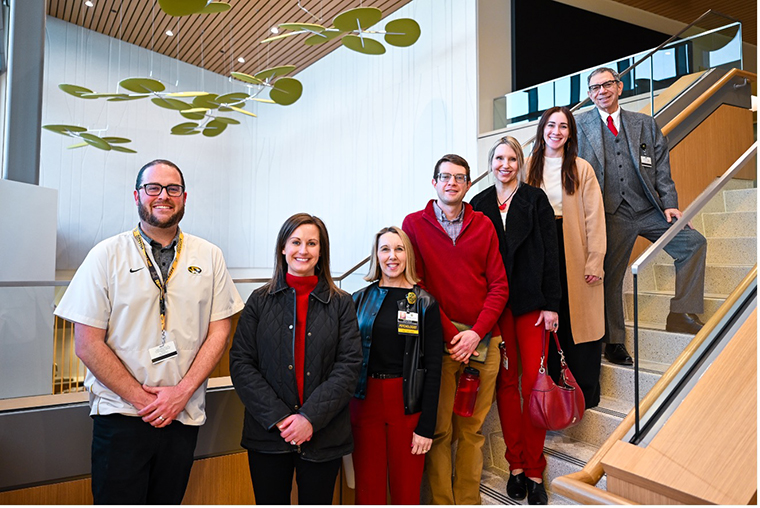
Established in 2005, the Thompson Center provides world-class interdisciplinary care for patients with autism and other complex neurodevelopmental conditions. Many providers across MU Health Care and the School of Medicine have their clinics at the Thompson Center or make frequent visits to care for patients with autism, Down syndrome, cerebral palsy and other rare conditions.
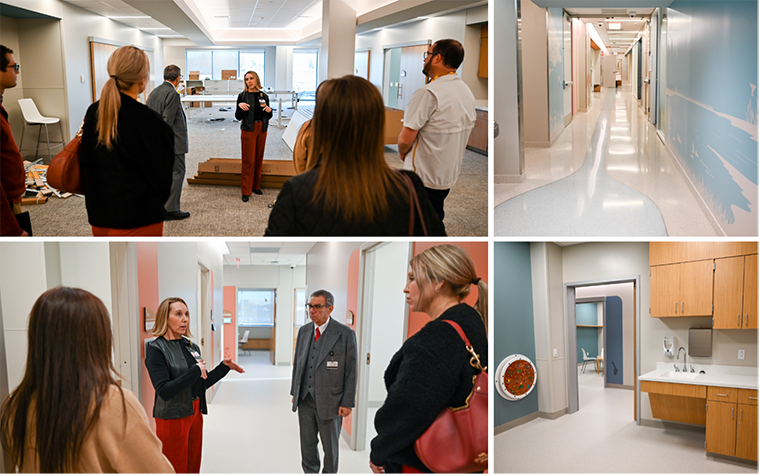
The new building was designed to be a place where neurodiverse patients can thrive. Warm, inviting spaces with muted colors and plenty of natural light put families at ease and reduce the need for extensive artificial lighting, which can contribute to sensory overload. Dimmable lighting in medical rooms allows families to tailor the environment to their needs. Acoustic panels reduce overall noise levels, and nooks tucked in the walls of public areas provide safe, calm spaces for patients who may feel overwhelmed.
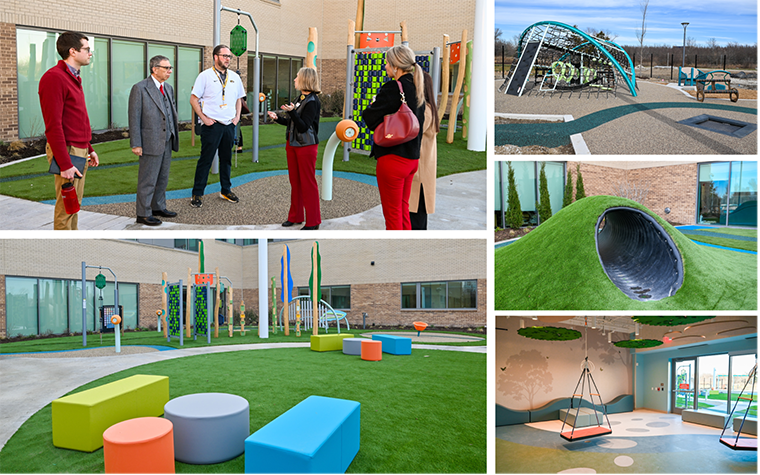
I was especially impressed by the new inclusive playground, which offers unique equipment and landscaping not seen in an average playground. Notable features include in-ground trampolines for wheelchair users, interactive sensory equipment, a hidden tunnel, a swing set with an adaptive swing and large awnings to provide shade.
The indoor therapy gym, located off the lobby, features multiple low-lying swings and large soft blocks for patient play and exploration. This flexible space will be crucial when the weather prevents patients from exploring the playground.
The clinical wing of the building provides multiple large open spaces designed specifically for provider collaboration and trainee mentorship. These spaces enable clinicians to find interdisciplinary solutions that fit each patient’s unique needs — a primary advantage of Thompson Center clinical care.
The main training and conference room features a large Hyperwall, a beautiful view of the playground and ample seating for a large crowd. Dr. Brooks explained that this space will provide an exceptional experience for training programs and other groups.
We are grateful for the ongoing support of the Thompson Foundation and its generous benefactors; leadership across the UM System; legislators; and the many construction, design and logistical teams that made this project possible. What a beautiful demonstration of the incredible innovations that arise when teams come together to meet the needs of our patients!
Sincerely,

Rick Barohn, MD
Executive Vice Chancellor for Health Affairs and Hugh E. and Sarah D. Stephenson Dean, School of Medicine
rbarohn@health.missouri.edu