
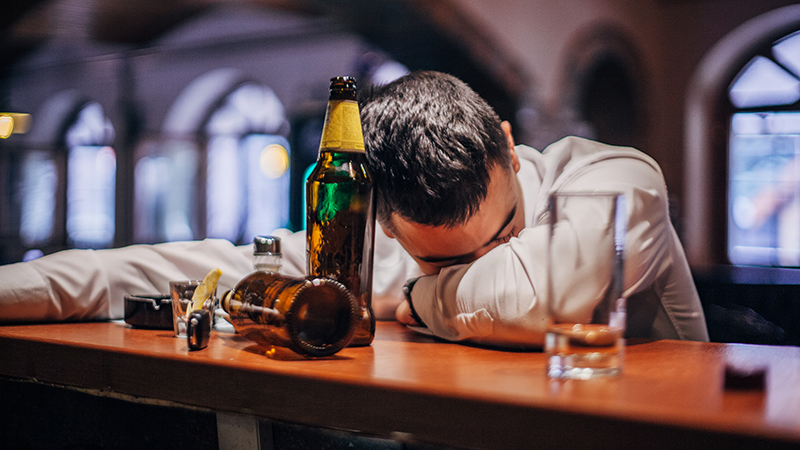
It’s not surprising if someone experiences memory loss, or a ‘blackout,’ while drinking alcohol. While common, blackouts are considered a public health concern linked to injury, arrest, assault and overdose. Given these consequences, the ability to identify and intervene in a blackout could reduce people’s risk for alcohol-related harm.
One researcher from the University of Missouri School of Medicine has developed a way to identify blackouts in real-time. In the study, 63 participants completed memory tests while they were actively drinking. They would view an image, and 15 minutes later, they had to report what they remembered. Theoretically, not remembering the image would indicate a blackout had occurred. Researchers compared these real-time memory tests of blackout to participants’ self-reported experiences the next day to determine if a blackout happened.
“In our study, not remembering an image while drinking was moderately correlated with next-day self-reports of blackout,” study author Mary Beth Miller said. “In contrast, over 90% of the time, if someone remembered all the images they saw while drinking, they didn’t self-report a blackout the next day.”
These memory tests are a breakthrough in alcohol research, Miller said, and are the first objective measure of alcohol-induced blackouts ever created.
“The biggest barrier to studying blackouts is that you can’t tell when they’re happening,” Miller said. “Being able to identify blackouts in real time will help us figure out when and why they happen.”
The researchers are still testing and building their memory testing tool. Since study participants were mainly social-drinking young adults, it’s possible that different populations, like older adults with alcohol use disorder, may have different results. They also want to see if results change after giving participants more information to remember.
Miller says the goal is to create an app that accurately identifies blackouts, rather than just ruling them out, but friends going out for drinks can still use the same testing method.
“Memory tests are a quick and easy way to gauge your friends’ risk of blackout while you’re out drinking. If you’re worried about your friend, you can just give them something to remember and ask about it roughly 15 minutes later,” Miller said. “If they don’t remember, it doesn’t necessarily mean they're blacked out, but I would keep an eye on them. If they do, you might feel a little reassured. They may not be making good decisions, but our data suggests they’ll probably remember those decisions tomorrow.”
Mary Beth Miller, PhD is an associate professor of psychiatry and the Director of the Health Intervention and Treatment Research Laboratory at the Mizzou School of Medicine.
“Predictive Value of Real-Time Memory Tests in Identifying Alcohol-Induced Blackouts in Situ” was recently published in Addiction. In addition to Miller, Mizzou study authors include members from the Department of Psychological Sciences: Sydney Shoemaker, grad student; Lindsey Freeman, PhD graduate; and Edgar Merkle, PhD, professor. Ashley Curtis and Jennifer Merrill contributed.