
Dear Colleagues,
Every day across our academic health system, life-changing care happens in our exam rooms, operating suites and therapy clinics. But some of our most innovative work happens quietly, behind the scenes. Few efforts illustrate that better than the work of our Mizzou OneHealth Biorepository.
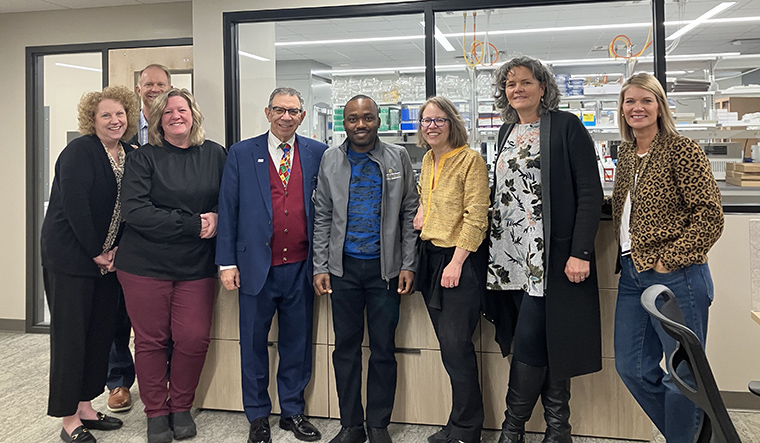
The biorepository is a shared resource that helps researchers study human tissue and blood samples to better understand disease and improve medical care. With patient permission and appropriate oversight, the biorepository collects, prepares and safely stores samples that come from medical procedures performed at MU Health Care.
These samples are not needed for a patient’s diagnosis or treatment and would otherwise be discarded. Biopsied tissue, for example, is often incinerated as medical waste.
Today, the biorepository houses more than 8,000 preserved tissue samples and 14,000 frozen blood and tissue samples, representing more than 3,000 medical procedures. These samples are advancing medical discoveries that benefit patients across Missouri and beyond.
Housed in newly renovated space on the second floor of the Medical Science Building, the biorepository represents a remarkable transformation. The MSB, which was built in 1954, has been thoughtfully renewed via federal grant support into a state-of-the-art laboratory space, marrying modern research capabilities with decades of institutional legacy.
The biorepository is led by Dr. Laura Schulz, professor in the Department of Obstetrics and Gynecology and an internationally respected researcher in the fields of placental and pregnancy health. Dr. Schulz is expanding the impact of this core laboratory by collaborating with physicians and scientists across the University of Missouri system. Each year, more than 50 MU researchers rely on the biorepository to support their work.
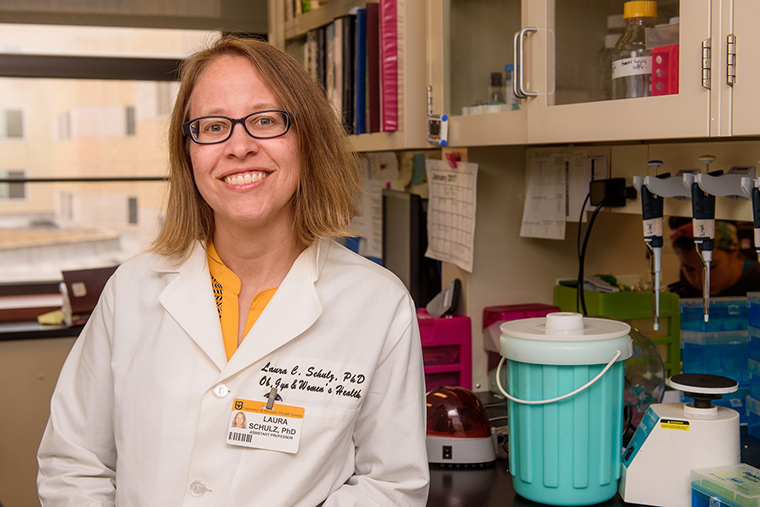
The success of the biorepository is also made possible by an outstanding team, including Jennifer Schnabel, lab manager; Kim Ray, who oversees the extensive regulatory and documentation requirements; and Kim Livingston, research specialist. Together, their expertise and dedication enable breakthrough research that meets high ethical standards.
In addition, the biorepository works closely with our colleagues in the Department of Pathology and Anatomical Sciences to procure tissue samples that allow MU Health Care patients to participate in clinical trials for the latest treatments, extending the impact of this work directly to patient care. Physicians, nurses and operating room staff all help the biorepository connect with patients who may be willing to donate and facilitate collection of biospecimens.
This effort reminds us that while we are proud of the care we provide right now, we are also committed to solving the medical challenges of tomorrow. Thank you to everyone who supports and advances this important work.
Sincerely,

Rick Barohn, MD
Executive Vice Chancellor for Health Affairs and Hugh E. and Sarah D. Stephenson Dean, School of Medicine
rbarohn@health.missouri.edu