
Dear Colleagues,
For more than 60 years, the Medical Science Building has served as a hub for interdisciplinary research and teaching.
The original building, built in 1954, has undergone numerous renovations over the decades. But in 2022, we developed a master plan to holistically improve and expand the capacity of available space within the building to support medical research.
That plan called for comprehensive renovations to the third, fourth, fifth and six floors of the building to create larger, more flexible team labs or lab suites to support multiple investigators and their research teams.
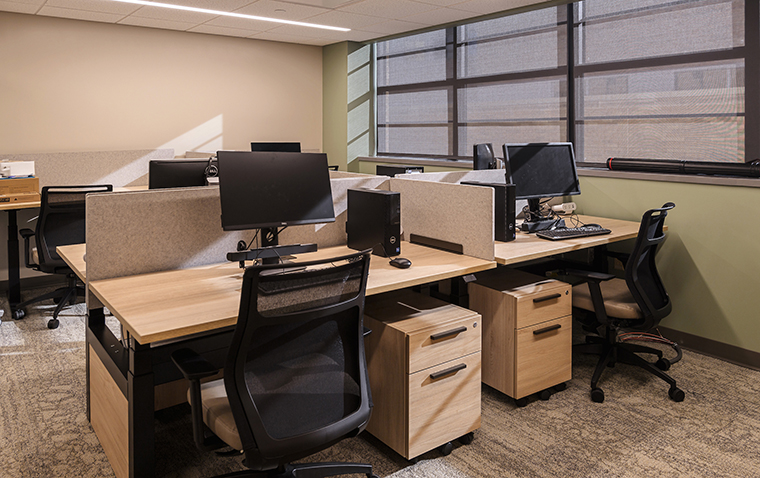
The renovations also involve updating teaching labs, collaborative spaces, improved faculty offices and classroom space for teaching and faculty meetings.
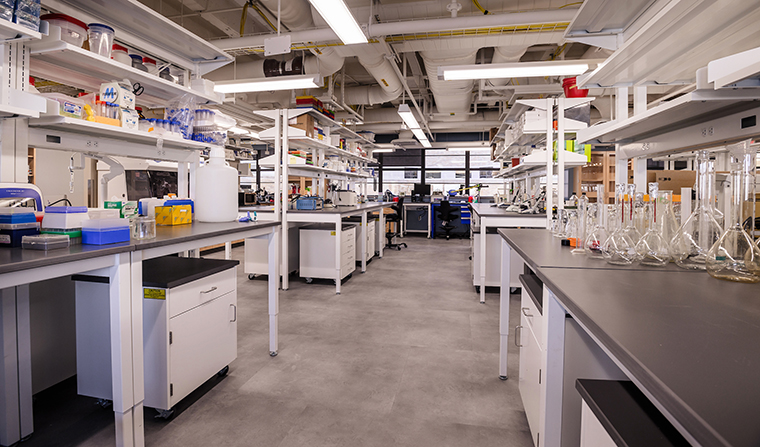
Construction crews have been busy working in four major phases since October 2023 to complete this ambitious project. While the entire project likely won’t be finished until 2026, we celebrated a milestone in January when faculty from the Departments of Molecular Microbiology and Immunology, Medical Pharmacology and Physiology; and Pathology and Anatomy moved into renovated offices and lab spaces.
As work continues, modernizations are already visible throughout the building, but there have also been upgrades to things you can’t immediately see. Those include improvements to the plumbing, heating and air conditioning, telecommunications infrastructure, emergency power, fire protection and venting systems. When complete, the project will improve the percentage of total research space in “good” or “excellent” condition in the Medical Science Building by 54%, providing an even safer and more useful environment where our researchers can do their best work.
I am so proud of the many collaborators who provided input for our master planning document and improvement project. It required many hours of work on top of their daily duties. Thanks to this massive team effort, we will be able to essentially create a new building inside our existing walls, at a price that was much less than constructing a new facility from the ground up.
I am hopeful these improvements that are transforming this historic building into a technologically advanced research facility will play a key role in helping us dramatically enhance the School of Medicine’s ability to recruit and retain the best and brightest leaders in medical research.
Thanks again to all of you who played a role in helping ensure the newly improved Medical Science Building will continue to serve the University of Missouri for years to come.
Sincerely,

Rick Barohn, MD
Executive Vice Chancellor for Health Affairs and Hugh E. and Sarah D. Stephenson Dean, School of Medicine
rbarohn@health.missouri.edu