
Glaucoma is a neurodegenerative eye disease, defined by the progressive death of nerve cells in the retina called retinal ganglion cells (RGCs) and damage to the optic nerve. It doesn’t have many warning signs, so significant and irreversible vision loss can occur before patients even realize what’s happening.
Researchers from the University of Missouri School of Medicine are exploring ways to prevent or slow degeneration associated with glaucoma. In a recent study, they found that administering a certain drug to trigger and enhance the cellular ‘cleanup’ process, called autophagy, helped retain RGCs.
“Autophagy is like the cell’s trash and recycling process,” lead author Prabhavathi Maddineni said. “It helps remove or recycle damaged cellular components, like the mitochondria. Our findings suggest that when this process becomes impaired in glaucoma, damaged mitochondria accumulate and contribute to RGC degeneration.”
Famously nicknamed the ‘powerhouse’ of the cell, the mitochondria are where the cell breaks down food and generates usable energy. Because RGCs are the only retinal nerve cells communicating with the brain, they process a lot of visual signals and cues, which require a lot of energy and coordination.
“The mitochondria work harder and naturally degrade as a result, so they need constant repair,” Maddineni said. “If damaged mitochondria are not properly removed, they can accumulate and cause cellular stress and degeneration. To help with this process, we ran two glaucoma models and used Torin 2, a drug that enhances autophagy. This preserved significantly more RGCs and improved their function.”
While Torin 2 is not approved for use in humans, these findings suggest that targeting and enhancing the autophagy process could protect against cell loss.
“The important finding is that restoring the cell’s ability to clear damaged mitochondria can protect RGCs,” Maddineni said. “Our next step is to identify more selective and clinically translatable ways to aid the body with autophagy and mitochondrial quality control. Ultimately, we hope this approach can complement current treatments that lower eye pressure and preserve vision.”
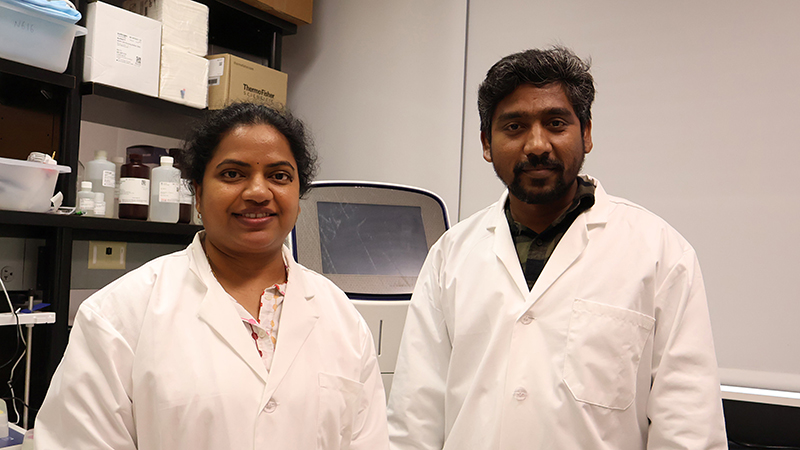
Prabhavathi Maddineni, PhD is an assistant professor of ophthalmology at the Mizzou School of Medicine. Her research focuses on glaucoma-related degeneration and neuroinflammation.
“Pharmacological restoration of impaired autophagy in retinal ganglion cells prevents abnormal mitochondrial accumulation and glaucomatous neurodegeneration” was recently published in Molecular Degeneration, a Springer journal. In addition to Maddineni, Mizzou study authors include Karthikeyan Kesavan, post-doctoral fellow. Balasankara Reddy Kaipa, Bindu Kodati, Linya Li, J Cameron Millar, Sam Yacoub, Ramesh B. Kasetti, Abbot F. Clark and Gulab S. Zode contributed.