
Exercise benefits nearly every part of the body, including the liver and metabolism. But, new research from the University of Missouri School of Medicine suggests those benefits may not look the same in males and females.
Mizzou researchers found endurance exercise altered how liver cells created energy, a process known as the Krebs cycle that happens inside individual cells in the mitochondria. Female rats had more proteins created with the energy cycle, whereas male rats had more proteins modified, or remodeled, by a chemical reaction that triggers the cycle.
“Male and female liver cells adapt to endurance exercise through distinct molecular pathways, which remodels the cellular structures responsible for producing energy. Think of it like female rats generated more proteins, while male rats changed more of their existing proteins,” lead author Scott Rector said. “These are subtle changes in the cellular energy process, and one sex doesn’t necessarily have a ‘better’ modification.”
Rector and his team found that exercise training improved liver health in both sexes – there was reduced liver fat, improved cholesterol use and disposal, and fewer markers of fibrosis, which is a buildup of scar tissue typically seen with liver injury or disease. Males specifically seemed to expel more cholesterol from the body than females.
“Why these different adaptations occur is still unclear, but we plan on investigating how these changes in the cell energy cycle might affect metabolism, which is how the body creates and uses energy,” Rector said. “Our findings indicate that endurance and consistent exercise improve metabolic ‘machinery.’ What else we could discover may provide more precise and personalized interventions for people with metabolic dysfunction-associated steatotic liver disease, or MASLD.”
MASLD, previously called nonalcoholic fatty liver disease, is the most common chronic liver disease, especially as the number of people diagnosed with obesity rises. The most severe forms can lead to cancer or cirrhosis, which can both be fatal.
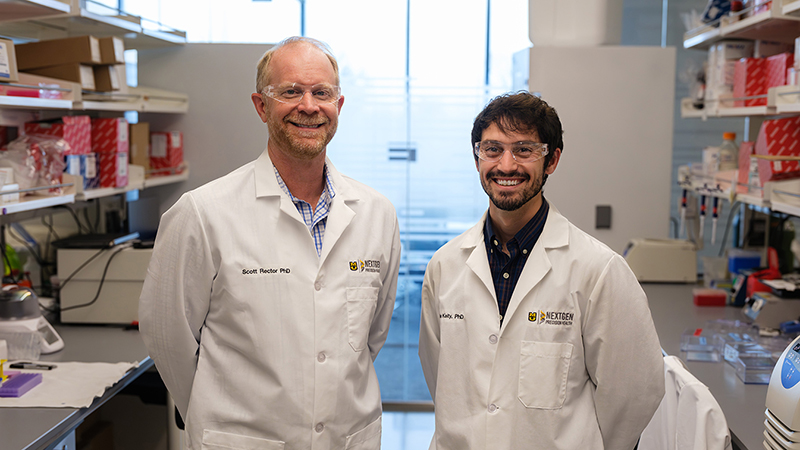
R. Scott Rector, PhD is a Curators' Distinguished Professor of Medicine and of Nutrition and Exercise Physiology, and Associate Dean for Basic Sciences and Research Infrastructure at the Mizzou School of Medicine. He is also the Director of the NextGen Precision Health building, a Curators' Distinguished Professor of Nutrition and Exercise Physiology, and a Research Career Scientist at the Harry S. Truman Memorial Veterans' Hospital.
“Endurance exercise elicits temporal and sexual dimorphic multi-omics remodeling of liver metabolism revealed by MoTrPAC” was recently published in Cell Reports. In addition to Rector, Mizzou study authors include Taylor Kelty, PhD, a research assistant professor at NextGen Precision Health. John Thyfault, PhD, professor of cell biology and physiology at the University of Kansas Medical Center, contributed as the co-corresponding author. Dr. Rector’s lab is a member of the NIH-funded Molecular Transducers of Physical Activity Consortium (MoTrPAC), one of the largest efforts to map the molecular effects of exercise across tissues. MoTrPAC is supported by the National Institutes of Health (NIH) Common Fund through cooperative agreements managed by the National Institute of Diabetes and Digestive and Kidney Diseases (NIDDK), National Institute of Arthritis and Musculoskeletal Diseases (NIAMS), and National Institute on Aging (NIA).