


Every day, without fanfare, a quiet team of problem-solvers keeps the University of Missouri School of Medicine running. In lecture halls, labs, offices and conference rooms, technology hums along – connecting people, powering research, enabling patient care and supporting education. We barely notice it, because it’s working exactly as it should.
That’s the point.
When technology is at its best, it’s invisible. But behind that is the School of Medicine’s Information Technology (IT) team, an essential crew of skilled professionals who anticipate problems before they arise, respond in moments when they do, and ensure that thousands of devices, systems and networks perform flawlessly.
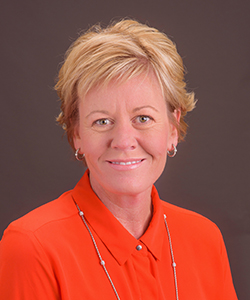
At the helm of this operation are Beth Bates, associate director of IT, and Rob Ingram, senior manager of IT. Together they lead a team that is tasked with fulfilling all technological needs and inquiries for the medical school. The team has witnessed firsthand the evolution of IT services at the School of Medicine, ultimately leading to a unified operation.
“The shift to a centralized IT team for Mizzou started around 2016 and was mostly in place by 2018,” said Bates. “Before that, each School of Medicine department had its own IT support, which at times could make things inconsistent and sometimes inefficient. The decision to bring everyone together into one team was part of a larger effort across campus to streamline services, reduce overlap and make IT support more reliable for everyone.”
Boasting countless academic departments, centers, institutes, labs, offices and programs, the School of Medicine possesses a vast group of individuals who require technical support. Whether it’s helping with personal passwords, deploying new workstations or transporting equipment for off-site meetings, Bates and her team strive to alleviate the stress of any technological need.
For Ingram, the ability to impact so many areas on a given day is personally fulfilling. Between new computer software installation or supporting the launch of a new facility in the medical school, there’s truly never a dull moment for him and his peers.
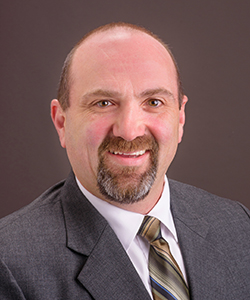
“One thing I love about this job is that we don’t really know what we’re walking into each day,” said Ingram. “Some days we learn that the internet or printers are down for example, and it can be hectic. We’ll field a lot of calls from faculty and staff and assist them in fixing the issue at hand. Currently, one item we’re busy with is transitioning people to Windows 11 software. To date, we support more than 5,000 devices at the workplace.”
The School of Medicine’s Patient-Centered Care Learning Center (PCCLC) opened in 2017, offering six floors and more than 97,000 square feet of space focused on patient-based learning. With any new large facility, ensuring technological needs are effectively met is critical.
While an operation of that scale can be daunting, Bates is always confident that Mizzou IT is up for the challenge.
“I’m probably most proud of how our team pulls together to make sure everything runs smoothly when a new facility opens, or a large conference event is scheduled,” said Bates. “Those kinds of occasions are chaotic by nature. Whether it’s testing audio-visual (AV) systems or making sure workstations and presentations are ready to go, our goal is always to make sure the technology works so others can focus on the event. It takes a lot of behind-the-scenes effort and our team always steps up.”
Related News
Paul de Figueiredo named Curators’ Distinguished Professor
Omenge’s research on endometriosis pain garners accolades
Family and Community Medicine expands POCUS education