
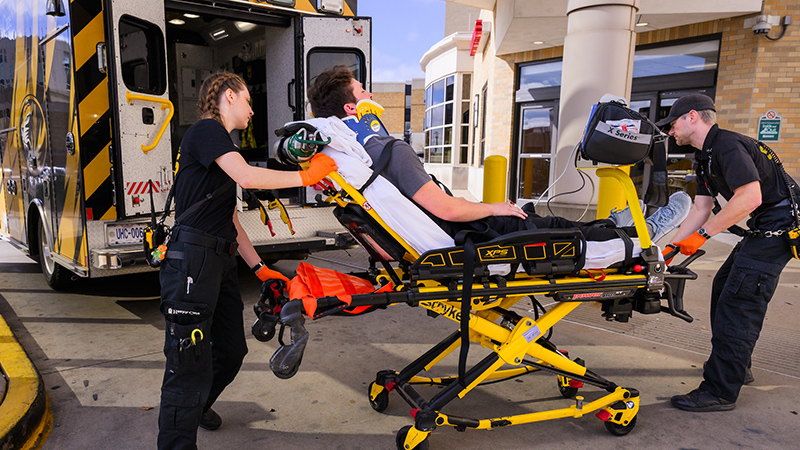
The University of Missouri School of Medicine’s Department of Emergency Medicine has been awarded a $4.6 million Safe Streets and Roads for All grant from the U.S. Department of Transportation to pilot an Advanced Critical EMS Response Program aimed at improving outcomes for patients injured in severe vehicle crashes.
The multi-year project focuses on post-crash care, a critical but often overlooked component of roadway safety. While infrastructure improvements and crash prevention are key safety efforts, survival and recovery after a serious crash depend heavily on the care provided in the first minutes following injury.
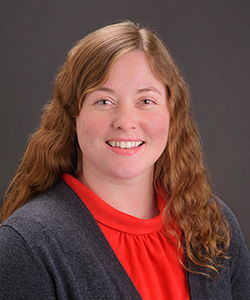
“This grant gives us an important opportunity to strengthen how prehospital trauma care is delivered,” said grant recipient Julie Stilley, PhD, associate research professor and director of research in the Department of Emergency Medicine. “By bringing advanced interventions directly to patients at the scene of severe crashes, we have the opportunity to improve survival, reduce complications and gather evidence to guide how post-crash care is delivered both in Columbia and beyond.”
Through this program, emergency medicine physicians and researchers will partner with local emergency medical services to enhance ground ambulance capabilities for high-acuity trauma patients. The pilot will introduce advanced prehospital interventions that are not typically available during standard ground EMS response, including:
- Administration of blood products to treat life-threatening hemorrhage
- Advanced airway management for patients with severe respiratory issues
- Critical medications used in trauma resuscitation that are traditionally limited to hospital settings
Stilley’s research team will evaluate whether the enhanced EMS response model improves survival rates and reduces complications for patients with serious roadway injuries. Findings from the study will directly inform updates to the City of Columbia’s Safety Action Plan and Vision Zero initiatives, strengthening the city’s data-driven approach to eliminating traffic-related deaths and serious injuries.
In addition to local impact, the project is designed to produce scalable, evidence-based guidance that can be applied across Missouri and in similar communities nationwide.
“We’re grateful for the opportunity to pilot this work in Columbia and be a leader for post-crash care,” Stilley said. “Our goal is to generate practical solutions that other communities can adopt to save lives on their roadways.”