
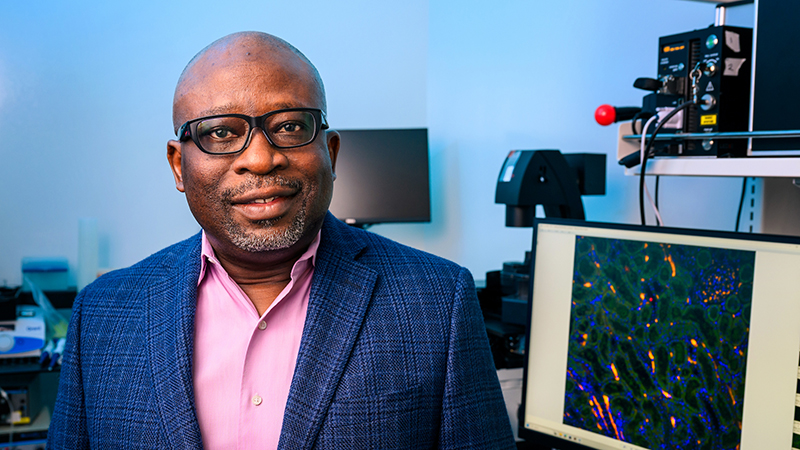
Babies in the neonatal intensive care unit (NICU) are more likely to have kidney problems, and premature infants particularly are at a higher risk for acute kidney injury (AKI). This is likely because the kidney is not fully formed until around 36 weeks into fetal development, so the organ may not work efficiently. Not to mention, NICU babies typically have other multiple health challenges, which can put stress on the kidney.
Adebowale Adebiyi, a researcher from the University of Missouri School of Medicine, recently received a $2.8 million grant from the National Institutes of Health (NIH) to study a previously unrecognized contributor to AKI – voltage-gated sodium channels (NaV). Typically, these proteins help move sodium molecules through cells, but Adebiyi’s research identified another function.
“We found that during infant kidney injury, when blood flow is restricted, these sodium channels are overactivated in blood vessels,” Adebiyi said. “This triggers a cascade of events that causes the kidney’s small blood vessels to constrict, depriving the kidney of oxygenated blood when it’s most needed, and can lead to organ dysfunction or failure.”
This project will focus on restoring healthy blood flow to infant kidneys, studying how nitric oxide works with specific NaV channels in blood vessels. Nitric oxide is a molecule naturally produced by the body that relaxes muscles and vessels, causing them to widen and allow for better blood flow. Dysfunction could lead to opposite effects.
Adebiyi believes that a disruption in the interaction between nitric oxide and NaV channels plays an important role in AKI. His team will test whether targeting this communication pathway can improve blood flow and protect kidney function in vulnerable newborns.
“We hope our research will help establish NaV channels as viable targets for precision medication and therapies,” Adebiyi said. “Most AKI research has focused on adult models, leaving NICU babies critically understudied. Our work aims to close that gap, and if successful, can improve outcomes for thousands of vulnerable infants worldwide.”
Adebowale Adebiyi, PhD is a professor of Medical Pharmacology and Physiology, Anesthesiology and Perioperative Medicine at the Mizzou School of Medicine. He is also the Russell D. and Mary B. Shelden Missouri Endowed Chair in Anesthesiology and a NextGen Precision Health Investigator.

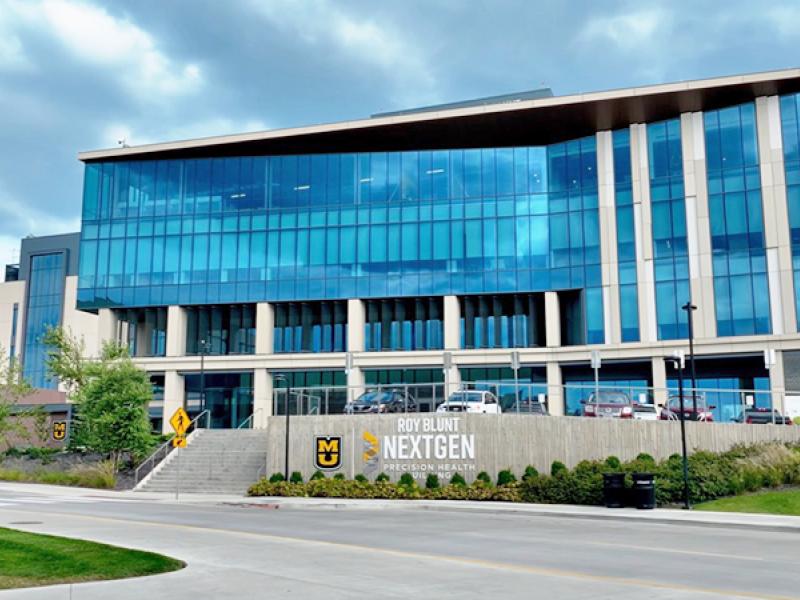
Highlighting the promise of personalized health care and the impact of large-scale interdisciplinary collaboration, the NextGen Precision Health initiative is bringing together innovators from across the University of Missouri and the UM System’s three other research universities in pursuit of life-changing precision health advancements. It’s a collaborative effort to leverage the research strengths of Mizzou toward a better future for the health of Missourians and beyond. The Roy Blunt NextGen Precision Health building at MU anchors the overall initiative and expands collaboration between researchers, clinicians and industry partners in the state-of-the-art research facility.