

A scientist from the University of Missouri School of Medicine recently received $2 million from the National Institutes of Health to support her research into human egg cells, fetal development and ovarian function.
After an egg is fertilized and becomes an embryo, it begins to differentiate into different cell types, eventually creating the structures needed for bones, muscles and other organs. As the embryo becomes a fetus and its reproductive organs grow – if the fetus is female – it also forms the ovarian reserve, which is the woman’s lifetime supply of egg cells.
Learning how these egg cells are maintained in the body may provide insight into how ovarian dysfunction, insufficiencies and aging impact the rest of the body. This could pave the way for future early detection, prevention efforts and clinical treatments of these women’s health issues.
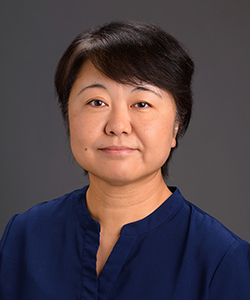
“My lab focuses on the development and function of the ovaries,” said Lei Lei, the grant recipient. “Our goal with this grant is to study how the body maintains egg cells for decades in the adult ovary and supports fertility and ovarian function.”
Lei’s team will also study the individual cell parts and cellular processes involved, like RNA translation. Ovarian dysfunction or insufficiency can lead to fertility and endocrine issues, but it can lead to other effects that aren’t directly tied to the reproductive organs.
“We’ve seen it linked to endocrine disruption and an increased incidence of issues in bone, cognition and cardiovascular health in women,” Lei said.
Lei also says this research will help us understand how cancer treatments may harm female fertility and assist in identifying potential therapeutic targets for fertility preservation, especially for young cancer patients.
Lei Lei, PhD is an associate professor of Obstetrics, Gynecology and Women’s Health at the Mizzou School of Medicine. The NIH grant was awarded through the National Institute of General Medical Sciences for $2.1 million over five years.