
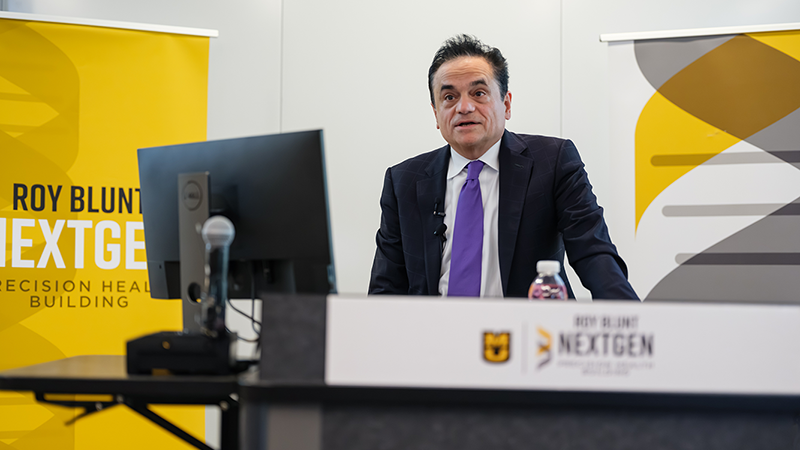
A newly published study co-led by the executive vice dean at the University of Missouri School of Medicine revealed that adults who have suffered a moderate to severe traumatic brain injury (TBI) are more likely to develop brain cancer.
A previous study found that veterans who had suffered a TBI while serving were more likely to develop brain tumors, but Dr. Ross Zafonte from the Mizzou School of Medicine and a team of researchers from across the country wanted to examine the connection between TBI and brain cancer in the civilian population.
“Military servicemen experience unique circumstances that civilians do not, like possible toxin exposures or stressors from combat, which may increase the risk of tumor development,” Zafonte said. “That’s why we wanted to examine a larger group of non-military TBI patients to determine if outcomes mirrored those of our military patients.”
Zafonte’s team examined more than 150-thousand civilian adults across three health systems, making this the largest and most varied study to date looking at a possible connection between brain tumor development and a history of TBI. They found that while patients with a mild TBI were not associated with a greater risk for brain cancer, patients who suffered a moderate to severe TBI were 50% more likely to develop a malignant brain tumor.
“Why moderate-to-severe TBIs increase the risk of tumors is not well-understood,” Zafonte said. “This could be because of disruptions in metabolic processes or an increase in inflammatory responses in the brain and nervous system.”
These findings may present an opportunity to identify brain tumors earlier. Patients with a medical history of a TBI could be screened for tumor growth, and the early detection of cancer would make it much more treatable and consequently improve patient outcomes. The study did not distinguish between different types of malignant brain tumors, though, and presents a research opportunity to see if there is a specific type linked to TBIs.
Ross Zafonte, DO is the Executive Vice Dean of the Mizzou School of Medicine and a Physical Medicine & Rehabilitation doctor at MU Health Care. His research specializes in brain injuries and recovery.
“Traumatic Brain Injury and Risk of Malignant Brain Tumors in Civilian Populations” was recently published in the Journal of the American Medical Association. Zafonte is the co-corresponding author with Saef Izzy, MD, a neurologist at Brigham and Women’s Hospital, which is connected to the Harvard Medical School health care system. Other authors include Sandro Marini, Amr Alwakeal, Hunter Mills, Joshua Bernstock, Ahmad Mashlah, Muhammed Hassan, Jakob Gerstl, Farid Radmanesh, Gundolf Schenk, Sharat Israni, Rachel Grashow, E. Antonio Chiocca, Cathra Halabi, Anthony DiGiorgio, Stephen Magill and Geoffrey Manley

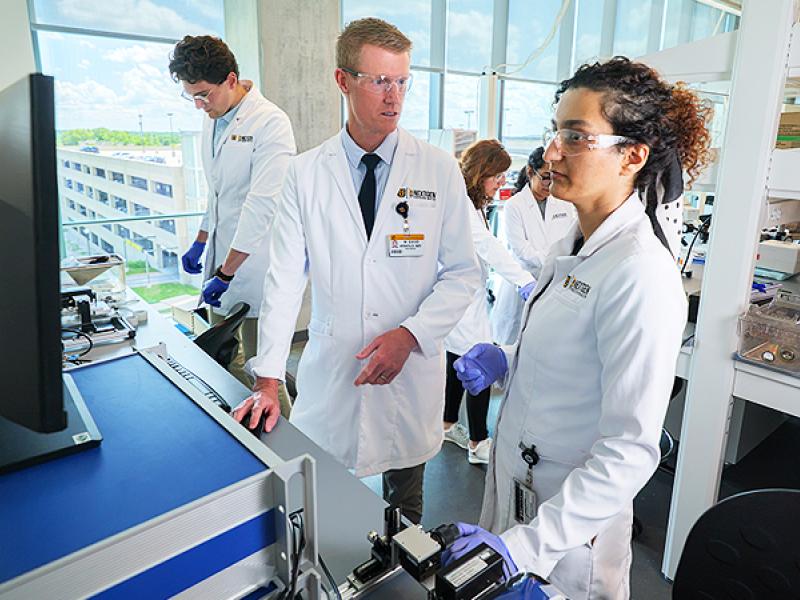
Highlighting the promise of personalized health care and the impact of large-scale interdisciplinary collaboration, the NextGen Precision Health initiative is bringing together innovators from across the University of Missouri and the UM System’s three other research universities in pursuit of life-changing precision health advancements. It’s a collaborative effort to leverage the research strengths of Mizzou toward a better future for the health of Missourians and beyond. The Roy Blunt NextGen Precision Health building at MU anchors the overall initiative and expands collaboration between researchers, clinicians and industry partners in the state-of-the-art research facility.